The decision you make first, whether you know it or not
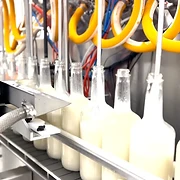
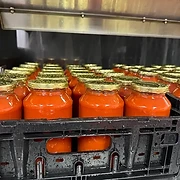
Every shelf-stable product runs one of two ways. Hot fill means the product goes into the bottle hot enough to sterilize the container and the closure, then the bottle is inverted so the headspace and cap see the same temperature. Cold fill means the product goes in at or near ambient, and stability comes from formulation, acidity, or a downstream process.
Founders usually inherit this decision from whichever co-packer they talked to first. That is backwards. The process determines your shelf life claim, your packaging choices, your unit economics, and how much of your original recipe survives to the shelf.
What actually drives the answer
Acidity. A product below roughly pH 4.6 has a fundamentally different risk profile than one above it. High-acid products are good candidates for hot fill with validated shelf stability. Low-acid products need a different conversation entirely.
Particulate. Pulp, pepper, horseradish, and vegetable solids behave differently under heat and settle differently in the bottle. Some products need the thermal step; others separate because of it.
Flavor sensitivity. Fresh herbs, garlic, and delicate aromatics change under heat. A careless hot fill flattens the exact thing your customers buy your product for. A well-run one barely touches it.
Shelf life target. If retail needs twelve to eighteen months, that constraint eliminates options before you have made a single choice.
The tradeoffs, honestly
Hot fill buys you validated shelf stability and simpler distribution, at the cost of a thermal step you have to control carefully. Cold fill preserves the freshest possible flavor profile, but the stability burden shifts onto formulation and often onto shorter dating or cold-chain requirements.
Neither is better. One of them is right for your product.
What to ask before you sign
Ask how they validate shelf life for your specific formulation, not for your category. Ask whether they run cap tightness and vacuum seal checks on every batch or on a sample. Ask what COA data points you will receive. Ask what happens to your recipe if it does not survive the process as written — and get the answer in writing.
A co-packer who cannot answer those four questions specifically is telling you something.